
A CONVERSATION WITH A RETIRED MADISON POLICE OFFICER
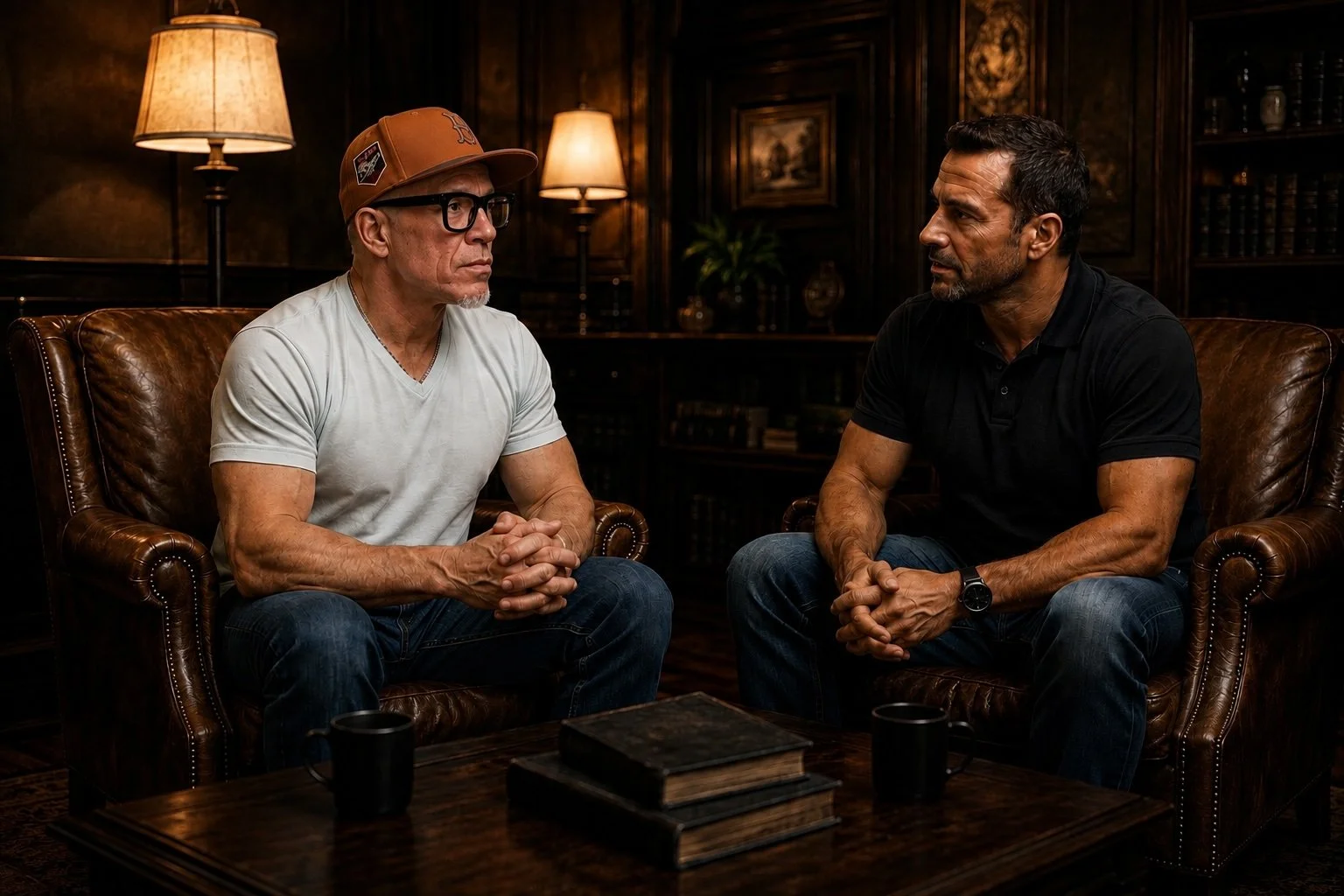
IT STARTED WITH A SHOOTING A FEW BLOCKS FROM OUR HOME.
A few weeks after Corey Ruiz was shot and killed by a Madison police officer on Williamson Street, we sat down at the Rotunda Cafe with Derek, a retired Madison police officer.
We wanted to understand something:
How does a situation get to that point?
We live only a few blocks from where the shooting happened. Video appeared online almost immediately, and regardless of where people stood on policing, watching an actual person get shot was disturbing.
There is a much larger story surrounding what happened that day. But that wasn't what we wanted to understand from Derek.
We wanted to understand the officer's side of an encounter.
What are officers trained to see? What are they trained to do? And when a situation begins moving in the wrong direction, what tools do they have to change where it ends?
THEN DEREK TOLD US HIS STORY.
Years earlier, Tony Robinson was shot and killed by a Madison police officer just a few blocks away on Williamson Street.
Derek wasn't involved in that shooting. But he was a Madison police officer, and during the anger that followed, that distinction didn't always matter.
He told us about being in uniform at places as ordinary as a grocery store and having people approach him to tell him they hated him or that he sucked.
Derek understood they didn't know him personally. He understood what they were angry about.
But understanding someone's anger doesn't mean it doesn't affect you.
Eventually, Derek retired earlier than he had planned from a career he loved.
That stayed with us.
We talk a lot about what happens when a community loses trust in its police. But what happens to policing when officers begin feeling rejected by the community they're supposed to serve?
WHAT DOES DE-ESCALATION ACTUALLY MEAN?
Madison police receive substantial training. MPD's recruit academy includes more than 900 hours of curriculum, followed by field training, and officers continue receiving annual training that includes de-escalation and scenario-based work.
So maybe the question isn't whether officers are trained.
Maybe it's:
Which skills need to be practiced repeatedly until they're instinctive under stress?
And that led to another question.
What is a threat?
Two people can encounter exactly the same situation and experience it differently.
Imagine a man walking alone down a dark street as another man approaches. Now imagine a woman in exactly the same situation.
Same street. Same darkness. Same approaching person.
Yet their experiences, physical differences and everything they've learned about personal safety may cause them to perceive that moment differently.
Police officers are human beings, too.
Training creates standards so decisions aren't based solely on individual instinct. But how much can training standardize perception? And when a decision has to be made in seconds, which part of that training actually takes over?
THEN DEREK BROUGHT UP SOMETHING MUCH SIMPLER.
Beat cops. He was a beat cop on State Street and remembers it as being the best time he had as a Madison cop.
Officers who spend time in a neighborhood—not simply driving through it or arriving after something has gone wrong.
They know the store owner. They recognize the teenager they've seen twenty times. They understand the neighborhood.
And the neighborhood begins to know them.
Research gives us reason to take that idea seriously. Philadelphia's targeted foot-patrol experiment assigned officers to violent-crime hot spots and found a significant reduction in violent crime during the experiment. Earlier research in Kansas City also taught an important lesson: simply putting more police cars on routine patrol didn't produce the same result.
That distinction fascinated us.
More police driving around isn't necessarily the same thing as more police relationships.
THE CONVERSATION CHANGED THE QUESTION.
We went into the conversation wanting to understand de-escalation.
We came out realizing it may be about much more than what happens in the final moments of a police encounter.
Training matters. Judgment matters. But so does what happens long before an officer ever has to make a split-second decision.
Does the officer know the neighborhood? Do people in the neighborhood know the officer? Is there trust before something goes wrong? And are the skills we expect officers to use under pressure practiced enough to become instinctive?
Derek gave us a perspective we couldn't have gotten from a policy document or a news story. He helped us see the system through the eyes of someone who spent years inside it.
And maybe that's where change begins—not by deciding who's right before the conversation starts, but by understanding the problem well enough to ask:
What would have to change so fewer encounters ever reach that final moment?
That's a question worth continuing to explore.
